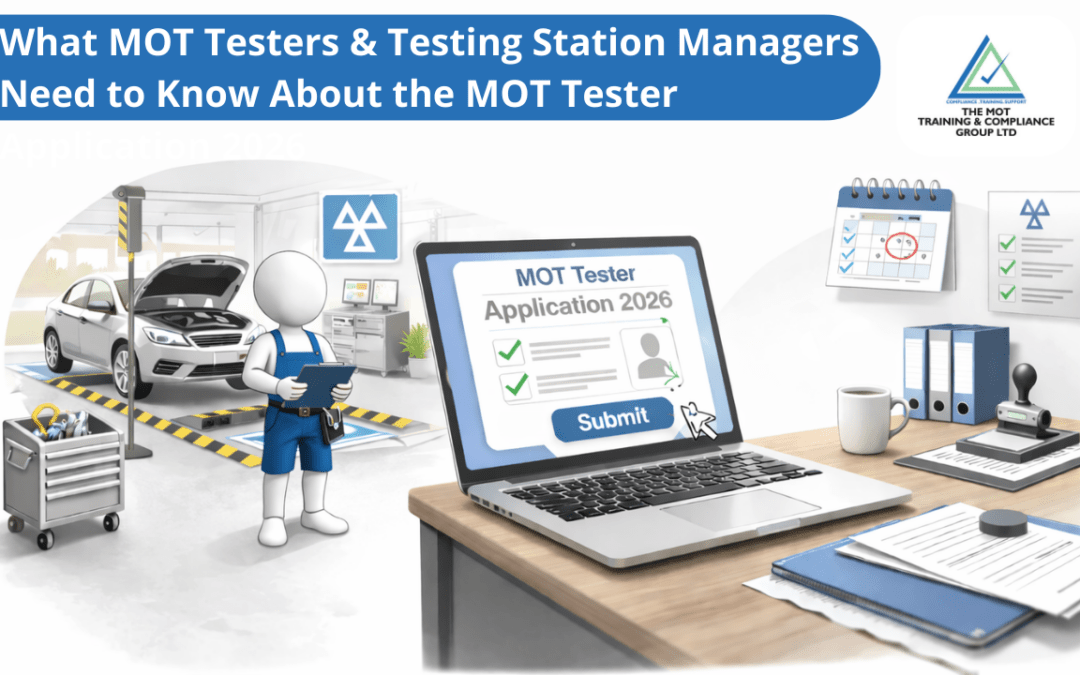
If you’re working through the MOT tester application 2026, or you manage a testing station and help candidates through the process, there are some important changes you need to know about.
The IMI and DVSA have updated the application requirements, and whilst most of the process remains familiar, there’s a significant new addition that candidates need to be prepared for well in advance.
Let’s walk through it all so there are no nasty surprises.
What Does the MOT Tester Application 2026 Involve?
The MOT tester application process requires candidates to demonstrate that they meet the eligibility criteria set by the DVSA. This includes holding the relevant qualifications, having the appropriate employment background in vehicle testing or repair, and having a full UK driving licence.
As a testing station manager, you’ll know the drill – but it’s worth making sure any new candidates coming through are fully briefed from the start, because the paperwork requirements for the 2026 MOT tester application have just got a little more involved.
What’s New in the MOT Tester Application 2026: Employment History Evidence
This is the big change.
The IMI and DVSA now require candidates to provide formal evidence of their employment history as part of the MOT tester application 2026. This isn’t just a case of listing previous jobs, you’ll need actual documentation to back it up.
We know this might feel like an extra hoop to jump through, but it’s designed to make the process more robust and ensure that everyone entering the MOT testing scheme genuinely meets the eligibility criteria. In the long run, that’s good for everyone.
What Employment History Evidence Do You Need?
You’ll need to provide a printed or digital copy of your employment history from GOV.UK. If you’re unable to do this, you’ll need to explain why in the box provided on the form and provide alternative evidence instead.
Other acceptable evidence includes:
- Payslips
- Invoices (if self-employed)
- Your contract of employment
- A signed reference letter from your employer on headed paper, or from an official company email address, including your start and end dates, your role, and whether the position was full time
- A subject access request from HMRC (more on that below)
Evidence must show the full name of the learner, employer name, pay and/or hours worked, start and end dates, job description and roles. So, you need to make sure that whatever you provide covers all those bases before submitting it.
How to Get Your Employment History from GOV.UK
For most candidates completing the MOT tester application 2026, this is the quickest and easiest route, and it’s simpler than it sounds.
Step by step:
- Go to gov.uk and search for “get proof of employment history” or use the link on your application form.
- Log in using your Government Gateway account (the same login you use for checking your tax code or National Insurance record). If you don’t have an account, you can create one in just a few minutes.
- Once logged in, view and download a record of your PAYE employment history
- Print it or save a digital copy and include it with your application
Don’t have a Government Gateway account? Don’t worry, it’s straightforward to set up. You’ll just need your National Insurance number and a form of ID to hand.
What If Your Employment History Isn’t Showing on GOV.UK?
This can happen, particularly if you’ve been self-employed, worked for cash in hand, or if older employment records simply aren’t on the system. If that’s the case for your 2026 MOT tester application, you have a couple of options.
Option 1: Use alternative evidence: payslips, contracts, and employer reference letters are all perfectly acceptable.
Option 2: Make a Subject Access Request to HMRC
This sounds more complicated than it is.
HMRC holds tax year information that may cover employment not visible on your GOV.UK employment history. You can request this data, it’s your right under data protection law.
Head to gov.uk and search “apply to make a subject access request to HMRC” or follow the link on your application form.
Bear in mind that this can take time to process, so make sure you submit the request as early as possible and don’t leave it until the last minute!
References – 2026 Application
Alongside the employment history requirements, the updated MOT tester application 2026 also includes a formal references section.
You’ll need to provide at least one professional reference who can be contacted to verify the evidence you’ve submitted. The form has space for up to three references, with an additional information box on page 3 if you need more.
Make sure your references know you’ve listed them and are happy to be contacted, there’s nothing worse than a reference being caught off guard!
Guidance for Testing Station Managers
If you have candidates working through the MOT tester application 2026, it’s worth sitting down with them early and going through the evidence requirements together. The employment history documentation can take time to pull together, especially if someone needs to make an HMRC subject access request.
Our advice: brief your candidates on these requirements at the very start of the process, not the day before the application is due. A little preparation goes a long way.
Frequently Asked Questions About the MOT Tester Application 2026
Do all candidates need to provide employment history evidence? Yes, all candidates completing the 2026 application need to either provide a GOV.UK employment history printout or explain why they can’t and supply alternative evidence.
How long does a HMRC subject access request take? HMRC aims to respond within one calendar month, though it can take longer. Submit your request as early as possible.
Who retains the employment evidence documents? The training provider must retain these documents in line with the Awarding Organisation’s requirements. They may be requested by DVSA Vehicle Examiners at any time.
Questions About the 2026 Application?
If you’re unsure about any part of the MOT tester application 2026, or you’re not sure what evidence will be accepted, please get in touch with us directly, it’s far better to ask upfront than to have an application returned incomplete.
The changes are straightforward once you know what’s needed, it’s just a case of being prepared!
This post is based on the 2026 Tester Application forms issued by the IMI and DVSA. Always refer to the most current version of the application documentation for full requirements.