You can tell a lot about a workshop before anyone’s even said hello. Long before we’ve looked at a single test record or sat down with a tester, we’ve already formed a pretty accurate picture of how strong your MOT Testing Station compliance really is, just from what we see on the way through the door.
We’re not being harsh…it’s just how it works, and it’s exactly how a DVSA assessor will see it too.
First impressions matter enormously in this industry, but most of what creates a great one costs nothing except a bit of care and consistency. So here are the seven things we notice within the first five minutes, and what each one tells us (and the DVSA) about your MOT Testing Station compliance:
Out on the Forecourt: Where MOT Testing Station Compliance Starts
Believe it or not, your MOT testing station compliance story starts before anyone’s even parked the car.
Here’s what catches our eye outside.
1. Your 3-triangle MOT sign
A road facing 3 triangle MOT sign, clean, undamaged and clearly on display, is often the very first thing a DVSA assessor clocks as they drive onto your site. It sounds like such a small detail, but it sets the tone for everything that follows. Faded, cracked or missing triangles suggest nobody’s been paying attention, and that’s never the impression you want to give before you’ve even switched the kettle on.
Keep the sign smart, keep the sign visible, and you’ve already won half the battle.
2. Your noticeboard
A tidy, up-to-date noticeboard, prominently displayed where customers and assessors alike will see it, is a good sign of good MOT Testing Station compliance. It shows that you take the administrative side of the job as seriously as the technical side. A curling poster from three years ago or a board crammed with out-of-date notices tells a very different story, so it’s worth keeping an eye on. Posters for Christmas parties and lost puppies do not belong on your MOT board.
3. Your viewing area signage
The viewing area needs to be signposted clearly. It’s a simple requirement, but one that’s easy to overlook, especially as MOT viewing areas are not used very often in many places. Clear signage tells a customer that they can watch their MOT if they’d like to and fulfils the DVSA requirement.
Inside the Workshop: The Real Test of MOT Testing Station Compliance
Once we’re through the door, the picture gets even clearer. This is where the day-to-day habits of your team really show through.
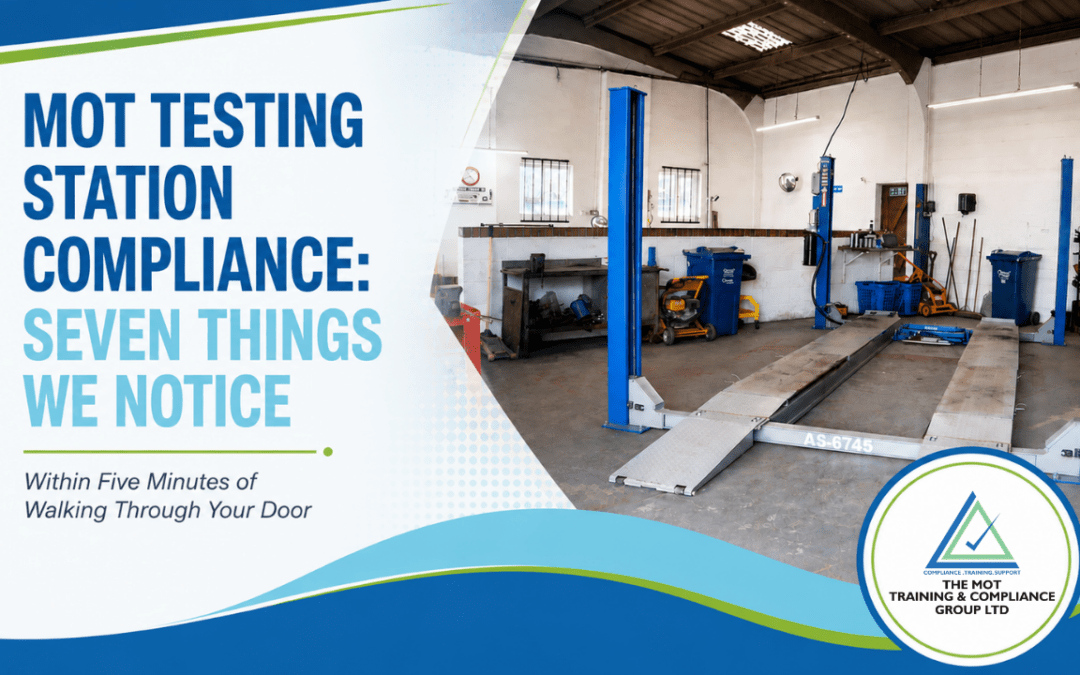
4. A clean, tidy MOT bay
The bay itself tells us almost everything we need to know.
Is it free from encroachment by whatever’s happening in the bay next door?
Are the brake rollers clear of the usual build-up of grit and rubbish?
A clean, well-organised bay isn’t just nice to look at, it’s a strong sign that testing is being carried out properly, without shortcuts or distractions. A cluttered bay, on the other hand, tends to go hand in hand with cluttered processes.
5. A fully stocked MOT shadow board
We LOVE a good shadow board. When every tool has its place and every place has its tool, it tells us the workshop values order and accountability, both of which are at the heart of solid MOT testing station compliance. Gaps on the board, or tools scattered wherever they landed last, suggest a looser approach that’s worth tightening up before it becomes a bigger issue.
6. Visible calibration reminders
Calibration due dates pinned up where the whole team can see them are a brilliant, low-effort way to keep everyone accountable. It shows that calibration isn’t just something one person quietly manages in the background, it’s a shared responsibility that the whole team is aware of. If your reminders are buried in a drawer or only exist in one person’s head, now’s a great time to get them up on the wall.
7. A fully engaged tester
Finally, and perhaps most importantly, when an MOT is logged on, is the tester actually there and properly focused on the job?
A tester who’s present, engaged and undistracted is the single clearest sign of good MOT testing station compliance you can possibly give us. It tells us the test being carried out right now is being done properly, which is, after all, the whole point.
Why These Small Things Add Up to Big MOT Testing Station Compliance
None of these seven things are complicated. There’s no expensive kit involved and no lengthy training course required. They’re simply habits, small, consistent, everyday habits that, together, build a workshop culture where good MOT Testing Station compliance is just how things are done, not something bolted on for an assessment day.
The best part is that once these habits are in place, they tend to stick. Your team feels the difference too. A tidy, well-organised workshop is a genuinely nicer place to work, and a team that takes pride in the details tends to take pride in the testing itself.
So, next time you walk through your own front door, try seeing it through fresh eyes.
Are the triangles standing proud?
Is the noticeboard telling the right story?
Is the bay ready to make a great first impression?
Small tweaks now can make a real difference to how your MOT Testing Station compliance is perceived, by us, by the DVSA, and by every customer who walks in behind you. Here’s a handy link to the MOT Guide where you can find the definite guidance.
If you’d like a hand getting these habits embedded across your team, that’s exactly what we’re here for. Get in touch and we’ll help you build an MOT Testing Station compliance culture your whole team can be proud of.